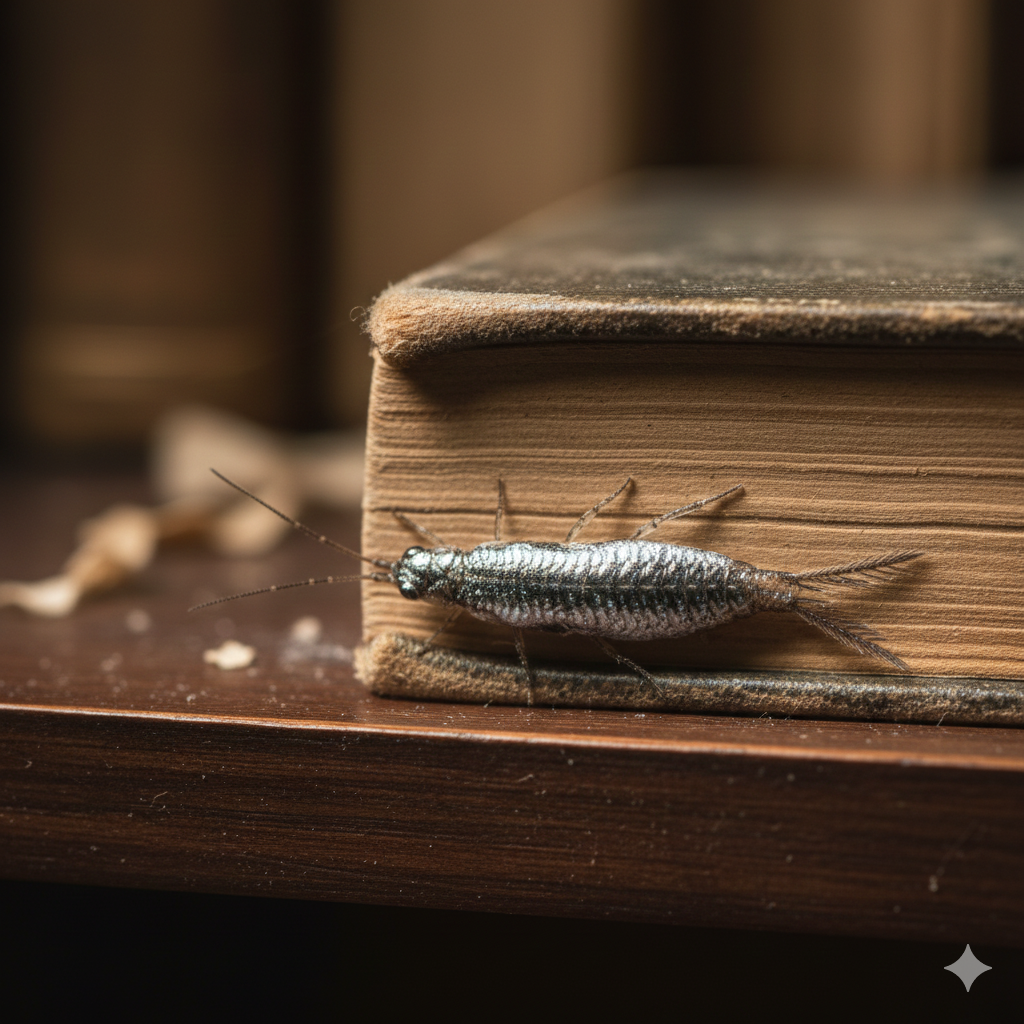
Silverfish
mediumLepisma saccharinum
Behavior & Habits
Silverfish are small, wingless insects with a distinctive silvery-blue metallic sheen and a unique, fish-like wiggling movement. They are strictly nocturnal and are rarely seen during the day. They have a slow development process but are capable of living for several years. Silverfish are destructive feeders, consuming items high in starch, sugars, and protein. Their diet includes paper (especially glossy paper), wallpaper glue, book bindings, linens, silk, cotton, and stored foods. They leave behind small holes, notches along edges, and tiny, pepper-like droppings.
Habitat & Signs
Silverfish require environments that are dark, cool, and highly humid (relative humidity of 75% to 95%). Their preferred habitats are typically near moisture sources. This includes bathrooms, kitchens, laundry rooms, damp basements, and attics. They hide in tight crevices, wall voids, behind baseboards, under sinks, and among stored boxes of paper, books, or clothing. They often follow pipes and utility lines, which allow them to move easily between different rooms and floors, seeking out damp, secluded spots.
Prevention & Control
- Control Humidity: Use dehumidifiers in damp areas like basements and crawl spaces, and ensure good ventilation in bathrooms and kitchens. Fix any leaky pipes or sources of water immediately.
- Reduce Clutter: Store books, magazines, old papers, and cardboard boxes off the floor and away from walls, preferably in sealed plastic containers rather than cardboard.
- Inspect Stored Items: Frequently check items stored in the attic or basement that contain starch or cellulose (like old clothing, books, or documents).
- Seal Entry Points: Caulk cracks and openings around windows, baseboards, and doorways to eliminate harborages and block potential entry points.
Get a Free Quote
Fill out the form below to request a free inspection or get a quote for our services.
Not what you were looking for?
← Back to Pest Library