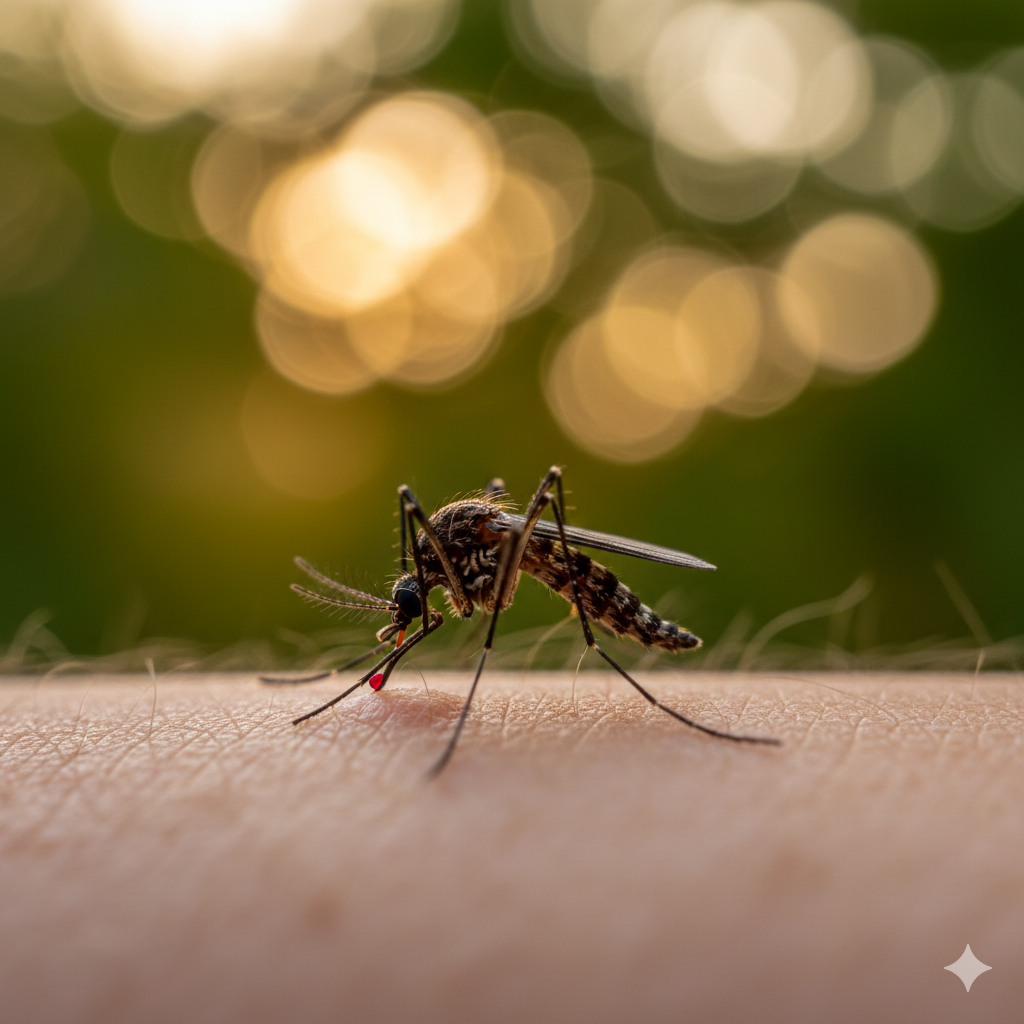
Mosquitoes
highCulicidae
Behavior & Habits
Mosquitoes are flying insects that feed on the blood of animals and humans; however, only the female mosquito feeds on blood—which she needs to produce eggs—while both males and females feed on nectar and plant juices for energy. They are most active during dawn and dusk (crepuscular activity), though some species, like the Aedes mosquito (Dengue carrier), are active during the day. They locate hosts primarily by detecting carbon dioxide exhaled by the host, as well as body heat and certain chemicals on the skin. Their complete life cycle (egg, larva, pupa, adult) is dependent on water.
Habitat & Signs
Mosquitoes breed exclusively in stagnant or standing water. This can be any container that holds water for more than a few days, including neglected flower pot saucers, bird baths, old tires, clogged gutters, open water tanks, construction sites, and drainage ditches. Adult mosquitoes rest in cool, shaded, and damp areas close to their breeding sites. This includes dense vegetation, tall grass, under decks, inside shaded porches, and dark corners of homes, particularly during the hot parts of the day.
Prevention & Control
- Eliminate Standing Water: The most critical step is to eliminate all sources of standing water. "Tip and Toss" weekly: empty and clean containers that hold water, such as buckets, planters, and pet dishes.
- Maintain Water Features: If you have water features or stored water (like coolers), ensure they are covered or treated to prevent larval development. For open drains or septic tanks, use appropriate covers or screens.
- Keep Gutters Clean: Ensure gutters and downspouts are free of debris so water drains properly and does not pool.
- Use Barrier Protection: Install and maintain intact window and door screens to prevent adult mosquitoes from entering the home. Use approved insect repellent when outdoors, especially during peak mosquito hours (dawn and dusk).
Get a Free Quote
Fill out the form below to request a free inspection or get a quote for our services.
Not what you were looking for?
← Back to Pest Library