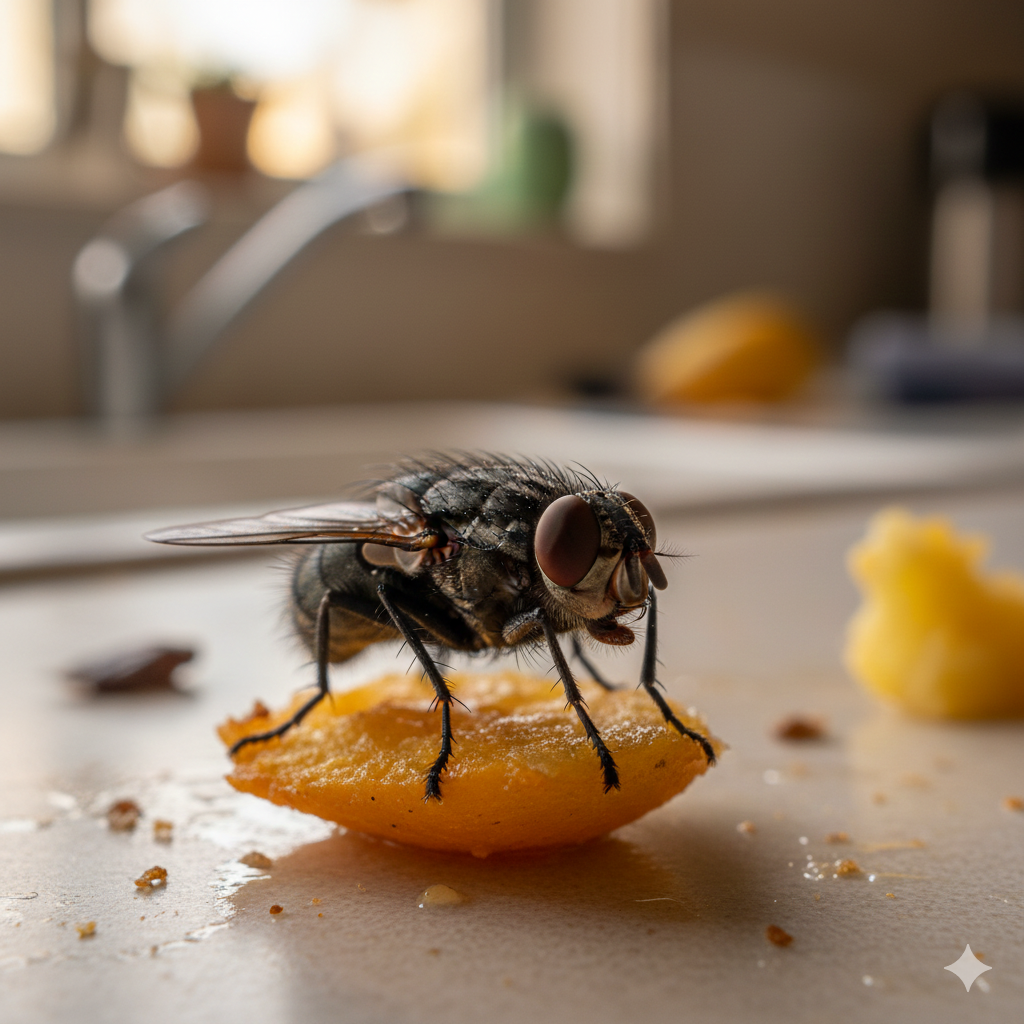
Flies
mediumDiptera
Behavior & Habits
The common house fly is a major sanitation pest known for spreading pathogens. Flies primarily feed on liquefied organic matter—they cannot chew solid food. They regurgitate digestive juices onto solid food sources to dissolve them, then suck up the resulting liquid. This behavior, along with their habit of moving between filth (garbage, feces) and food preparation areas, makes them highly effective disease carriers. They possess excellent eyesight and typically move by flying and landing repeatedly, leaving behind tiny, dark fecal spots known as "fly specks." They are most active during the warmer parts of the day.
Habitat & Signs
Flies are strongly attracted to areas with abundant decaying organic matter for both feeding and egg-laying (breeding). Their primary habitat is near garbage bins, dumpsters, pet waste, spilled food, compost piles, and drainage areas where filth accumulates. Indoors, they often congregate in kitchens, food preparation areas, storage rooms, and near open windows and doors. The life cycle, from egg to adult, is completed rapidly in warm, moist, and suitable breeding material, often resulting in quick population explosions.
Prevention & Control
- Sanitation is Key: Immediately clean up food spills, especially sugary liquids. Ensure all garbage is stored in bins with tight-fitting lids and is emptied frequently.
- Pet Waste Management: Promptly clean up pet feces, as it is a major breeding and feeding site for flies.
- Seal Entry Points: Install and maintain tight-fitting screens on all windows and doors. Use air curtains in commercial settings where doors must remain open.
- Manage Moisture and Drains: Keep surfaces dry and ensure floor drains are regularly cleaned and treated, as the sludge and organic matter buildup are ideal fly breeding sites.
Get a Free Quote
Fill out the form below to request a free inspection or get a quote for our services.
Not what you were looking for?
← Back to Pest Library