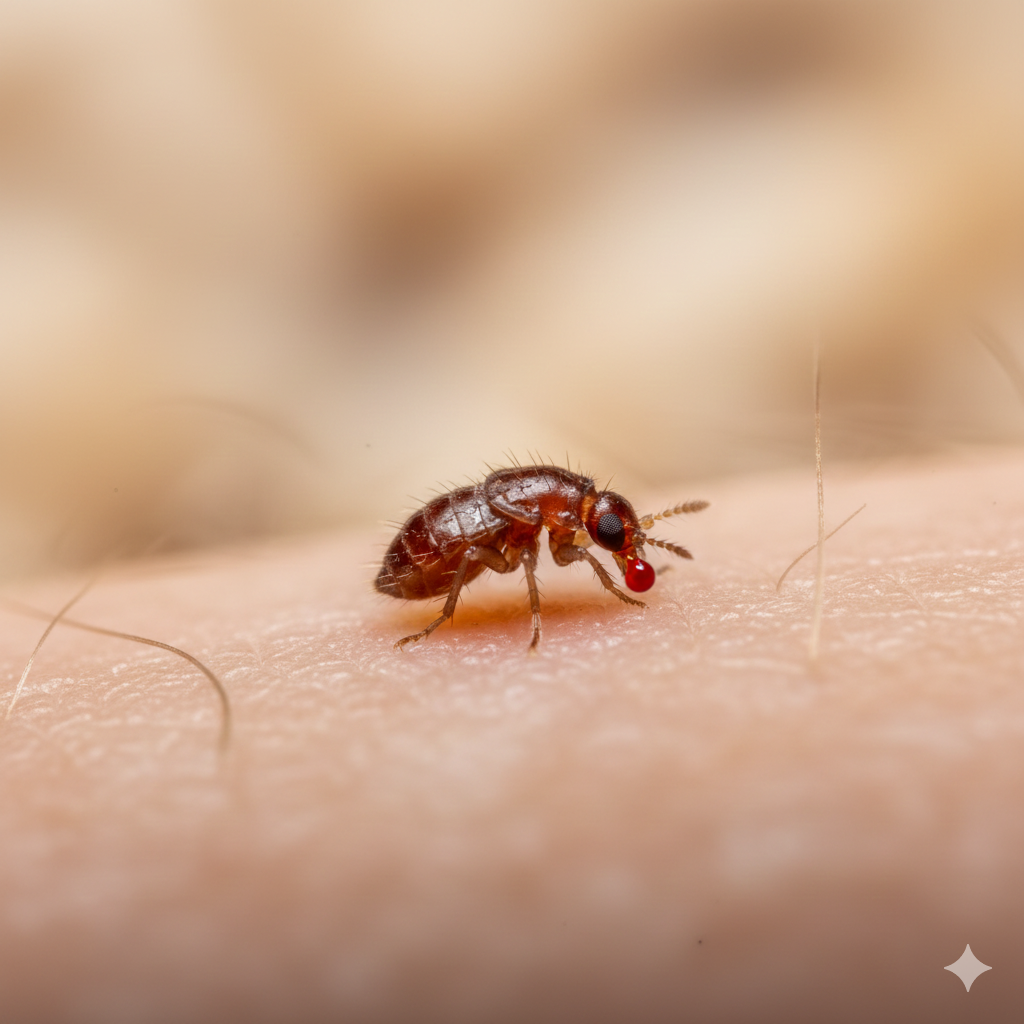
Fleas
mediumSiphonaptera
Behavior & Habits
Fleas are small, wingless insects known for their ability to jump great distances (up to 150 times their own height) using their powerful hind legs. They are external parasites that feed on the blood of mammals and birds. The most common species, the cat flea, feeds on cats, dogs, and humans. Adult fleas spend nearly all their lives on the host. However, the eggs, larvae, and pupae develop off the host in the surrounding environment. Flea bites typically result in small, red, itchy bumps, often found in clusters or lines, usually around ankles or on the legs.
Habitat & Signs
The adult flea's habitat is the body of the host animal. The eggs, larvae, and pupae, however, thrive in the host's environment. Indoors, this includes carpets, bedding (pet and human), upholstered furniture, and cracks in floors. Larvae feed on "flea dirt" (digested blood excreted by adult fleas) and organic debris. Outdoors, fleas are found in shaded, humid areas where pets rest, such as under decks, in kennels, or in tall grass and leaf piles. Infestations are often brought into the home by pets, though they can be introduced by stray animals or infested clothing.
Prevention & Control
- Pet Treatment: Consult a veterinarian for year-round, effective flea control products for all pets in the household.
- Regular Cleaning: Frequently vacuum all carpeted areas, rugs, and upholstered furniture, paying close attention to corners and under furniture. Immediately dispose of the vacuum bag outdoors in a sealed container, as the pupae can hatch inside the bag.
- Wash Bedding: Regularly wash all pet bedding, human bedding, and throw rugs in hot water and dry on the highest heat setting.
- Yard Maintenance: Keep the lawn mowed, remove piles of debris, and ensure shaded outdoor areas are well-maintained, reducing resting and breeding spots for fleas.
Get a Free Quote
Fill out the form below to request a free inspection or get a quote for our services.
Not what you were looking for?
← Back to Pest Library