Ants
mediumFormicidae
Behavior & Habits
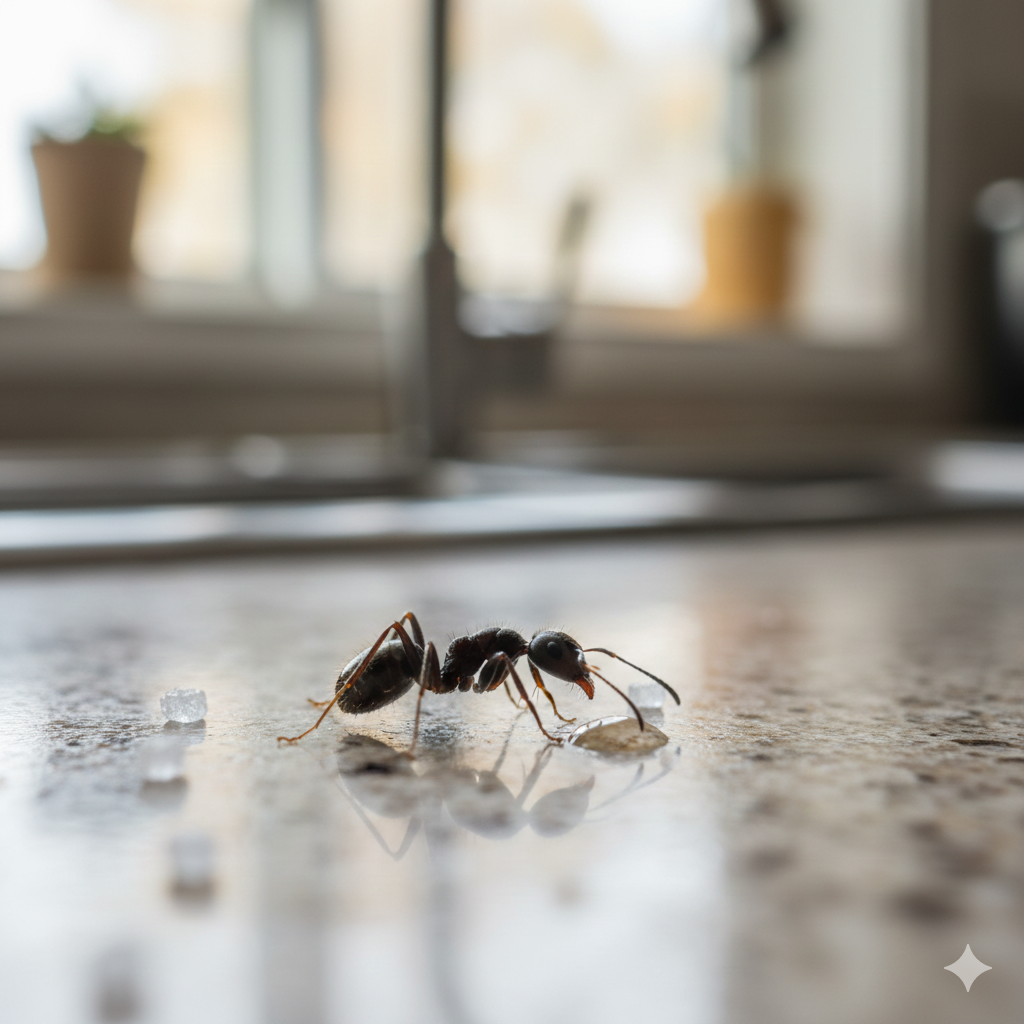
Ants are highly social insects that live in large colonies with a distinct caste system (workers, queens, males). Their most recognized behaviour is trail following, where worker ants leave behind invisible chemical scents (pheromones) to guide others from the nest directly to a food or water source. Ants are primarily attracted to sweet and greasy foods. They are persistent foragers, capable of moving large distances and exploiting tiny entry points. While most species are simply a nuisance, some (like Pharaoh Ants) can carry disease, and others (like Carpenter Ants) can cause structural damage.
Habitat & Signs
Ants establish their nests, or colonies, both indoors and outdoors. Outdoor habitats include soil, lawns, under pavements, logs, rocks, and near building foundations. Indoor habitats are typically hidden, providing warmth and shelter, such as wall voids, under floors, behind baseboards, in insulation, and in damp wood (Carpenter Ants). They often enter buildings through minute cracks in the foundation, gaps around windows and doors, utility line entries, and even through the roof. Proximity to moisture and readily available food sources is key to their indoor survival.
Prevention & Control
- Maintain Scrupulous Cleanliness: Wipe up all food crumbs and liquid spills immediately. Do not leave dirty dishes in the sink. Store all food, including pet food, in sealed, airtight containers.
- Remove Water Sources: Fix leaky pipes and clear away any standing water. Ants are drawn to water as much as they are to food.
- Seal Entry Points: Caulk and seal all visible cracks and gaps on the exterior foundation, around windows, doors, and where utility lines enter the building to block their trails and entryways.
- Trim Vegetation: Keep tree branches and shrubs trimmed away from the house structure, as these can serve as bridges for ants to access the roof or windows.
Get a Free Quote
Fill out the form below to request a free inspection or get a quote for our services.
Not what you were looking for?
← Back to Pest Library